
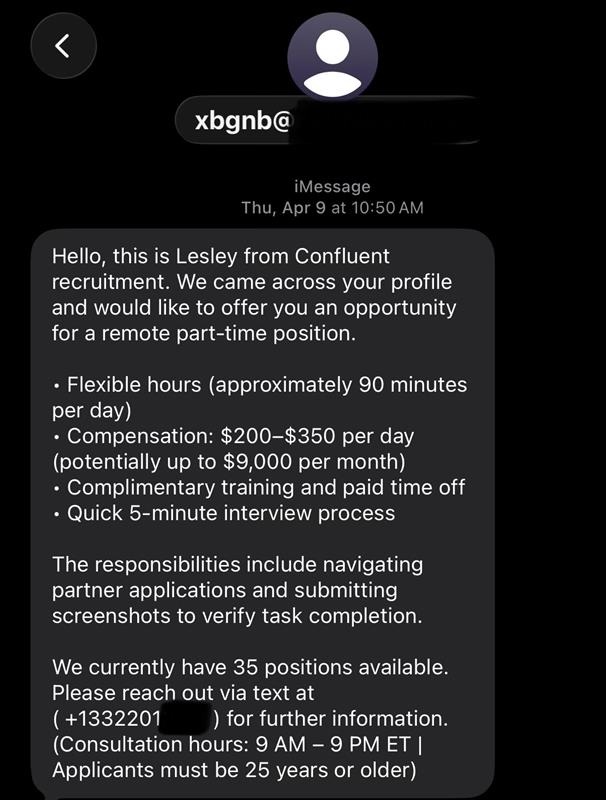
The example shown above represents only one of many scam tactics used by fraudsters.
Imagine receiving a text message offering a high‑paying job with flexible hours and no interview required. It sounds convenient, flattering, and tempting. Unfortunately, this is exactly how job offer text scams hook their victims.
These scams are becoming increasingly common, and they can cost consumers thousands of dollars, as well as their personal and financial information. Knowing the warning signs is the best defense.
What Is a Job Offer Text Scam?
A job offer text scam occurs when criminals send unsolicited text messages pretending to offer legitimate employment opportunities. The messages often claim to come from well‑known companies or staffing agencies and promise fast hiring, easy tasks, and unusually high pay. The goal is simple: to steal money, personal data, or both.
Why These Scams Are So Effective
Scammers prey on job seekers, students, retirees, and anyone looking to earn extra income. Text messages feel personal and urgent, and many people do not expect scams to arrive via SMS instead of email.
These scams work because they:
- Require little effort to respond
- Exploit financial stress or job uncertainty
- Use real company names to appear credible
- Create urgency so victims act before questioning the offer
Common Red Flags to Watch For
If you receive a job offer by text, look closely for these warning signs.
- You Didn’t Apply for the Job
Legitimate employers don’t randomly text job offers. If you never submitted an application or shared your resume, that is a major red flag. - Too Good to Be True Pay
Scammers often advertise extremely high pay for simple tasks, such as “$500 a day for 1-2 hours of work” or “easy remote job, no experience required.” - No Formal Interview
Real employers have interviews, whether by phone, video, or in person. Being hired instantly or after answering a few text messages is a strong sign of a scam. - Requests for Money
Any job that asks you to pay upfront fees, purchase equipment with your own money, or cash or deposit a check and send funds elsewhere is almost certainly a scam. - Pressure and Urgency
Scammers push you to act immediately with phrases like “only a few spots left,” “respond within 24 hours,” or “offer expires today.” Urgency is designed to stop you from thinking critically. - Unprofessional Communication
Poor grammar, vague job descriptions, and requests to move the conversation to apps like WhatsApp or Telegram are all warning signs.
How Job Offer Text Scams Typically Work
While details vary, many scams follow a similar pattern:
- You receive an unsolicited job offer via text.
- A “recruiter” communicates only by text or chat.
- You’re promised quick pay for easy work.
- You’re asked for personal information or money.
- The scammer disappears once they get what they want.
In some cases, victims unknowingly help launder stolen money, which can lead to serious legal issues.
How to Protect Yourself
You can reduce your risk by following these best practices:
- Don’t respond to unsolicited job texts
- Research the company using official websites, not links in the message
- Never share personal or banking information via text
- Avoid clicking links from unknown senders
- Trust your instincts. If something feels off, it probably is
If a message claims to be from a well‑known employer, independently find the company’s official contact information and verify the offer directly.
What to Do on Your Phone if You Receive a Suspicious Job Text
Taking action directly on your phone helps protect you and helps stop scam activity.
For iPhone Users:
- Do not reply to the message, even to say “STOP.” To report the message as junk, open the text and tap Report Junk, then select Delete and Report Junk.
- To block the sender, tap the number or name at the top of the message, select Info, and choose Block this Caller. You can also filter unknown senders by going to Settings, selecting Messages, and turning on Filter Unknown Senders. This moves texts from unknown numbers to a separate folder, making scams easier to spot.
- If you clicked a link or shared personal or financial information, change your passwords immediately and contact your financial institution right away.
For Android Users:
- Do not respond to the message or click any links.
- Using Google Messages, open the conversation, tap the three dots, and select Report spam, then Block.
- To enable automatic spam protection, open the Messages app, go to Message Settings, and turn on Spam Protection.
- If you shared personal or banking information, update your passwords immediately and monitor accounts for suspicious activity.
What to Do If You’ve Been Targeted
If you receive or fall victim to a job offer text scam:
- Stop communicating with the sender immediately.
- Do not send money or additional information.
- Block the phone number.
- Report the scam to your mobile carrier, the Federal Trade Commission (FTC), and your financial institution if money or data was shared.
Scammers are constantly changing their tactics, and job offer text scams are one of the fastest‑growing threats. Staying informed is the most effective way to stay protected. Legitimate job opportunities don’t arrive out of the blue, don’t pressure you for money, and don’t avoid real interviews. When in doubt, pause, verify, and protect your personal information. Awareness today can prevent financial loss tomorrow.